Pairing food and wine
 By
By 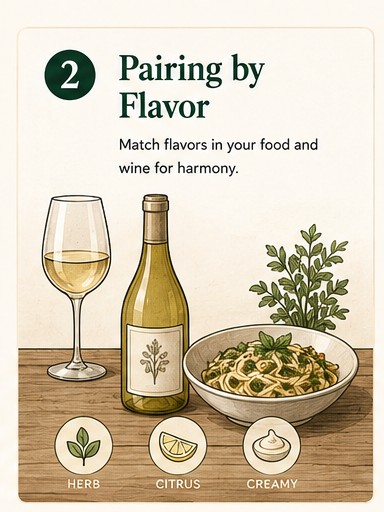
Pairing by flavor
Pairing by weight
Pairing by intensity
Regional pairing
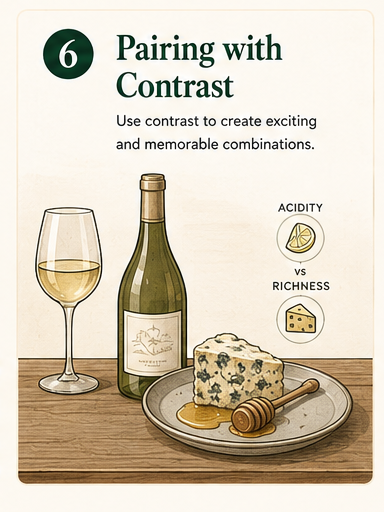
Pairing with contrast
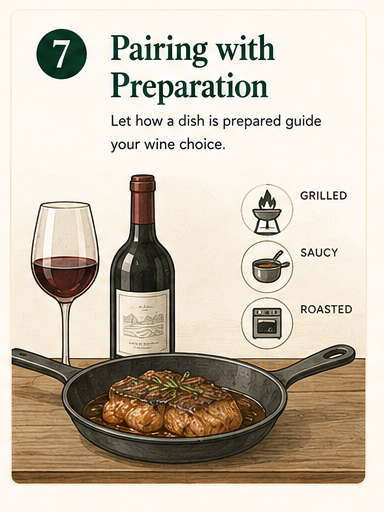
Pairing with preparation
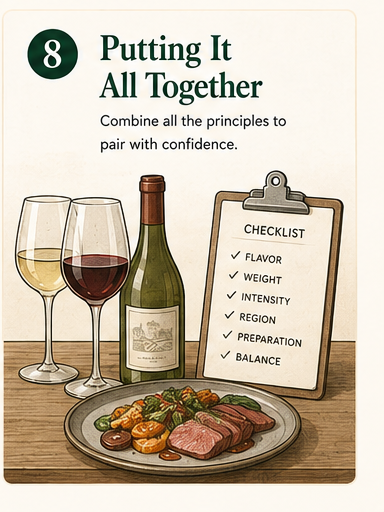
Putting it all together
A quick eight-step framework for food and wine pairing. The same principles as the full series, in one short read.
Pairing food and wine sounds complicated, but it comes down to a small set of decisions. You do not need a sommelier vocabulary or a wine list to apply them. Here is the framework in eight quick principles — useful at the dinner table tonight.
1. The foundations
Four things actually move a pairing: weight (how heavy the wine feels), intensity (how strong its flavors are), flavor (the actual notes), and balance (how the wine and dish hold each other up). Match the wine's weight and intensity to the dish first; let flavor refine the choice.
2. Pair by flavor
Find one common thread between the wine and the dish. A citrus-driven Sauvignon Blanc loves a squeeze of lemon on grilled fish. A peppery Syrah meets a peppercorn-crusted steak in the middle. You do not need every flavor to overlap — one shared note is plenty to make the pairing feel intentional.
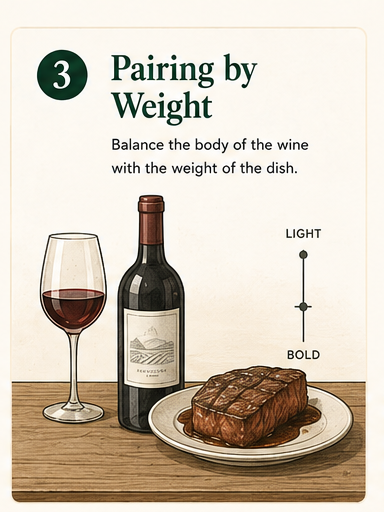
3. Pair by weight
Lighter dishes want lighter wines; heavier dishes want fuller ones. A delicate sole goes flat against a heavy Cabernet. A braised short rib drowns a thin Pinot Grigio. If you remember nothing else about pairing, remember this one.
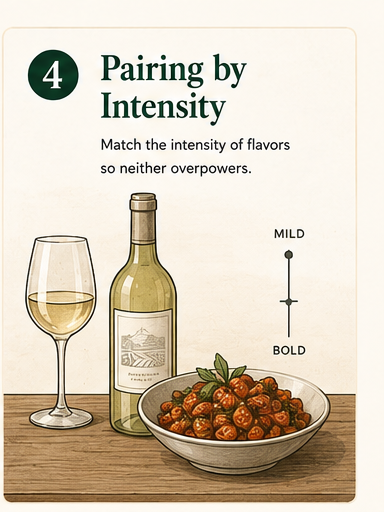
4. Pair by intensity
A subtle dish loses to an aggressive wine. A bold dish steamrolls a subtle wine. Match the volume so neither side disappears. A meaty mushroom risotto and a medium Burgundy speak the same way; a delicate steamed fish and a soft unoaked Chardonnay do too.
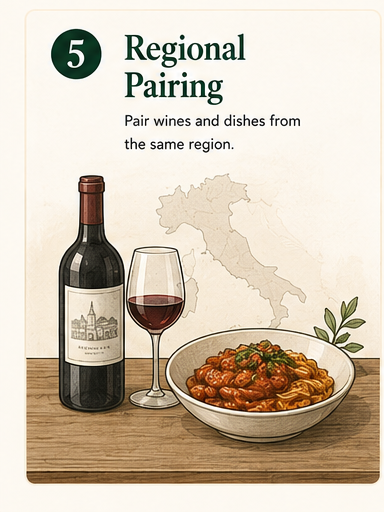
5. Try a regional pairing
"What grows together goes together" is a cliché because it works. Tuscan reds with Tuscan tomato sauce. Loire whites with goat cheese from the Loire. Albariño with Galician shellfish. Local food and local wine evolved on each other — they are built to pair.
6. Use contrast on purpose
Sometimes you want the wine to push back on the dish. Sweet wine against spicy food (off-dry Riesling with Thai curry). High-acid wine against rich food (Champagne with fried chicken). Contrast pairings are bigger, louder, and more memorable than matches — use them when the dish is rich enough to take the pushback.
7. Pair to the preparation, not just the protein
"Chicken" is not the pairing decision. Roasted chicken with herbs wants a different wine than fried chicken or chicken tikka masala. Sauce and cooking method usually outweigh the protein itself. Pair the dish the way it is actually being eaten, not the way the menu names it.
8. Put it all together
The framework in one sentence: match weight and intensity, find a shared flavor note (or a deliberate contrast), and let the preparation guide the final choice. None of these rules are absolute — when a pairing surprises you, write down what worked and pair on that next time. The best pairing is the one you actually drink and eat together.