Cooking with Wine
 By
By - How to approach cooking with wine with confidence.
- Common mistakes and how to avoid them.
- When and how to apply this in real situations.
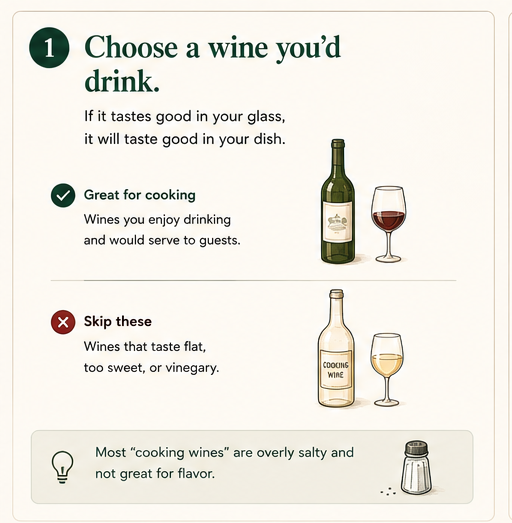
Choose a wine youd drink
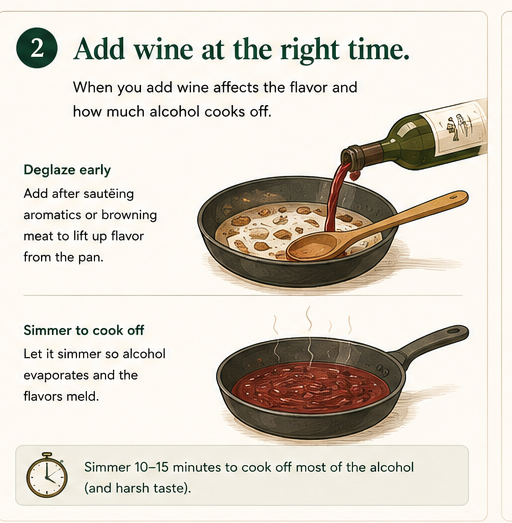
Add wine at the right time
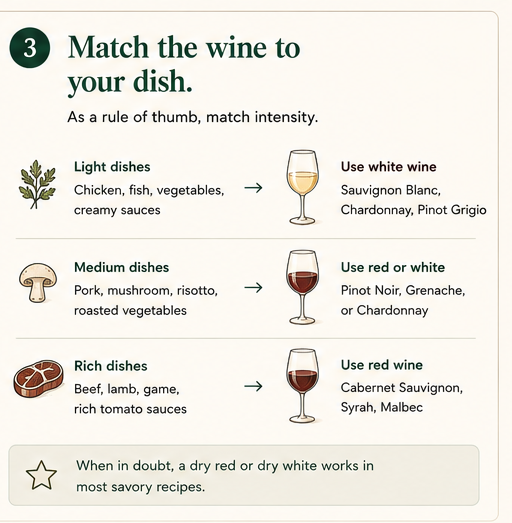
Match the wine to your dish
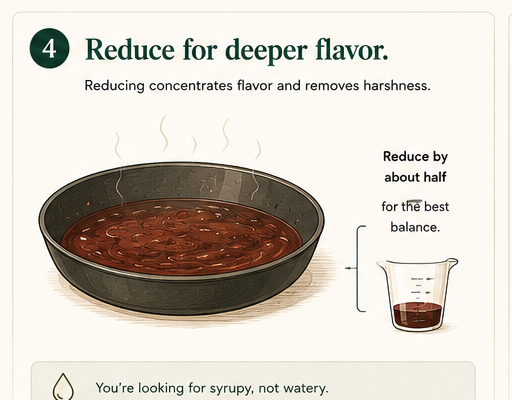
Reduce for deeper flavor
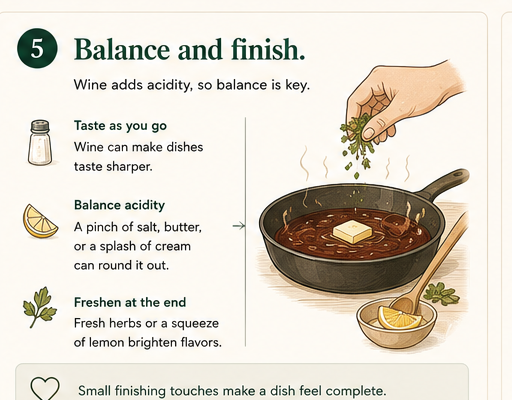
Balance and finish
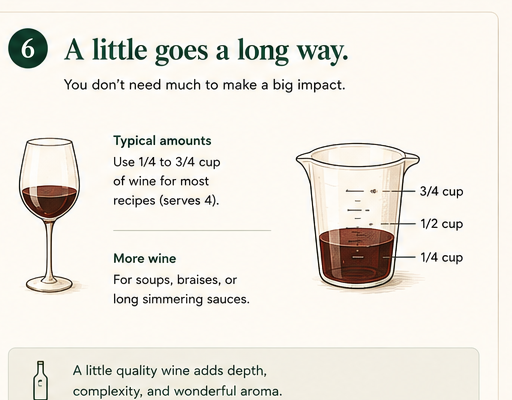
A little goes a long way
Wine is one of the most useful ingredients in cooking. It adds acidity, complexity, and depth to sauces, braises, and marinades in ways that water or stock alone cannot replicate.
The First Rule: Use Wine You'd Drink
Avoid anything labeled "cooking wine." Cooking wines sold in grocery stores are typically low-quality wines with added salt and preservatives, and they will not improve the food. The essential principle is straightforward: the wine should taste good on its own. If you wouldn't pour it in a glass, it won't improve the food.
You don't need an expensive bottle. A wine that costs a modest amount and that you enjoy drinking is exactly right for cooking.
How Wine Works in Cooking
When wine is added to a hot pan, the alcohol evaporates quickly. What remains are the wine's acids, sugars, and aromatic compounds, which concentrate as the liquid reduces. This is why a good wine adds so much more to a sauce than a poor one — its flavors become more intense, not less, as it cooks down.
Add wine early enough in the cooking process for the alcohol to cook off and the wine to integrate with the other ingredients. If you add wine at the very end, the taste of raw alcohol will still be present.
Choosing the Right Wine for Cooking
When a recipe calls for dry white wine, a Sauvignon Blanc or unoaked Chardonnay is a reliable choice — they offer a clean, crisp character that complements a wide range of dishes without overpowering them. For dishes with bold spices or aromatic ingredients, a more aromatic white such as Viognier or Riesling can add interesting contrast.
For red wine in cooking, match the weight of the wine to the dish. Hearty braises and roasts generally benefit from a fuller-bodied red such as a Syrah or Zinfandel. Lighter preparations — a simple tomato sauce or a mushroom reduction — can work well with a Pinot Noir or a medium Merlot.
Common Applications
- Deglazing: After searing meat or vegetables, add wine to the hot pan to lift the caramelized bits (fond) stuck to the bottom. This is the foundation of many pan sauces.
- Braising: A long braise in red wine transforms tough cuts of meat. The acidity in the wine helps break down collagen, while the wine's flavor becomes deeply integrated into the dish.
- Marinades: Wine-based marinades tenderize and flavor meat before cooking. The acid in the wine acts on the protein, while the aromatics penetrate.
- Risotto: A splash of white wine early in the risotto process adds brightness and helps develop the dish's characteristic creaminess.
- Poaching: Delicate proteins like fish and eggs can be poached in a court bouillon made with white wine and aromatics.
Wine and Food Pairing at the Table
The same principles that guide cooking with wine also inform pairing wine with food. A dish made with a particular wine often pairs naturally with that same wine at the table — the shared flavor compounds create harmony. Rich, butter-based sauces pair well with full-bodied whites; tomato-based dishes often work well with medium-bodied reds that have good acidity. Lighter preparations call for lighter wines.
A Note on Alcohol
Most of the alcohol in wine evaporates during cooking, but not all of it. A dish simmered for fifteen minutes retains more alcohol than one braised for two hours. For most purposes this is a minor consideration, but it's worth knowing for those who need to avoid alcohol entirely.

Stuck on something?
Five free questions, no jargon. Scott can answer your specific question about this lesson.
Ask Scott a question →